Rotary Kiln Shell Sections
The rotary kiln shell is the primary structural component of the clinkerization system.
Mit Ingenieuren sprechen · +91 9216071677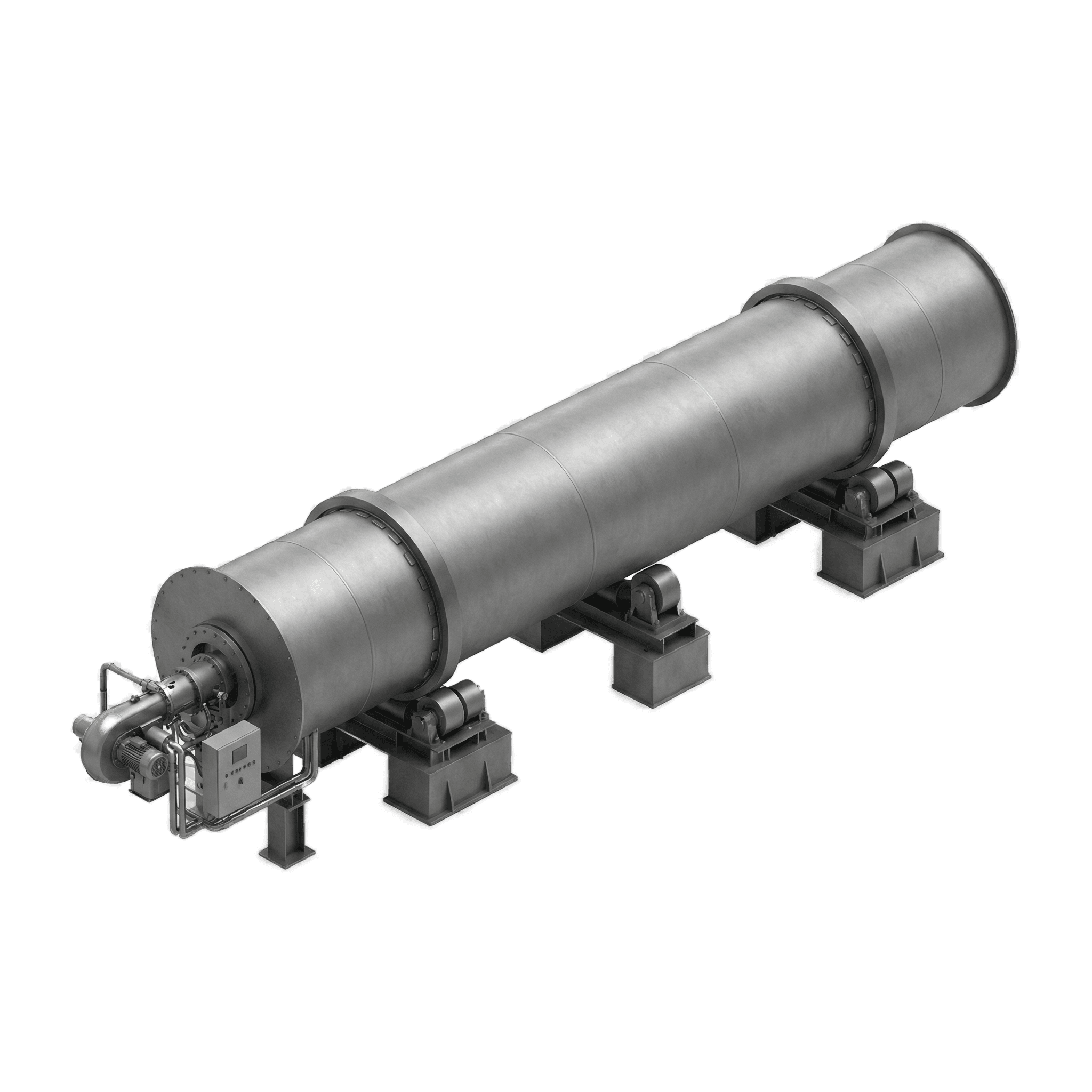
Rotary Kiln Shell Sections
Angebot anfordernÜbersicht
The rotary kiln shell is the primary structural component of the clinkerization system.
It carries the full mechanical and thermal burden of continuous cement production.
Operating in extreme environments, the kiln shell is exposed to: severe thermal cycling, internal refractory lining loads, external tyre and roller loading, rotational bending moments, and progressive ovality deformation.
Structural precision of the shell directly influences mechanical stability, refractory life, sealing performance, and overall thermal efficiency.
Oswal Engineers designs and fabricates kiln shell sections engineered for long-term structural integrity under high-temperature continuous operation.
Operational Stress Conditions
A kiln shell operates under combined mechanical and thermal forces:
Thermal Cycling
Internal Refractory Load
External Tyre Loading
Rotational Bending Moments
Shell Ovality
- Repeated heating and cooling cycles generate expansion and contraction stress.
- Shell material must withstand differential temperature gradients without distortion.
- The refractory lining applies continuous radial load and introduces additional thermal stress.
- Tyres transmit concentrated loads to shell support zones, creating localized stress regions.
- Continuous rotation under load generates bending forces along the kiln axis.
- Deformation at tyre locations causes cyclic shell flexing, influencing refractory performance and structural fatigue.
- Engineering the shell to manage these forces is fundamental to kiln reliability.
Engineering Design Principles
Oswal kiln shell sections are designed using structural load analysis and fatigue evaluation to ensure controlled stress distribution across the entire circumference.
Each shell section is engineered for:
Material grade selection and plate thickness are optimized according to kiln diameter, operating temperature, and load profile.
- Structural integrity under high thermal stress
- Controlled shell ovality within permissible limits
- Uniform load transmission across support points
- Long-term fatigue resistance under cyclic loading
Fabrication Precision
Dimensional accuracy is critical for rotational balance and long-term alignment stability. Every shell section is manufactured under strict dimensional tolerances to ensure:
Advanced rolling and welding procedures are applied to maintain geometric accuracy and minimize distortion.
- Alignment continuity along the kiln axis
- Concentricity precision
- Mechanical balance during rotation
- Accurate flange matching at field joints
Welding & Metallurgical Control
Kiln shell welding zones are critical structural areas subjected to thermal fatigue. Oswal fabrication procedures include:
Welding parameters are qualified to ensure long operational life under cyclic thermal conditions.
- Controlled heat input welding
- Pre-heating and post-weld stress control
- Residual stress minimization
- Non-destructive testing (NDT) validation
- Radiographic and ultrasonic inspection
Structural Performance Outcomes
Well-engineered shell sections result in:
Shell geometry stability directly improves kiln draft stability and energy efficiency.
- Reduced mechanical stress concentration
- Lower refractory failure rate
- Improved tyre and roller life
- Stable sealing interface performance
- Extended kiln service life
- Reduced unplanned shutdown risk
Integration with Kiln Mechanical System
Rotary kiln shell sections are not standalone components. They operate as an integrated part of:
Precision shell geometry ensures that all downstream mechanical systems function within design parameters.
- Tyre and roller assemblies
- Thrust control systems
- Kiln sealing systems
- Refractory lining structure
Quality Assurance & Inspection
Each shell section undergoes:
Documentation is maintained for full traceability and lifecycle reference.
- Dimensional inspection
- Concentricity verification
- Roundness measurement
- Weld integrity testing
- Surface stress evaluation
Engineering Outcome
A stable shell ensures stable rotation, stable refractory, stable combustion, and stable production. Mechanical integrity at the shell level defines the long-term performance of the entire kiln system.
A stable shell ensures stable rotation, stable refractory, stable combustion, and stable production. Mechanical integrity at the shell level defines the long-term performance of the entire kiln system.

Bereit, Ihre Anforderungen zu besprechen?
Kontaktieren Sie unser Engineering-Team für anwendungsspezifische technische Unterstützung.