Rotary Airlock Valve Systems
Rotary airlock valves form the mechanical boundary between gravity-fed discharge systems and pneumatic conveying circuits, maintaining pressure integrity while enabling continuous material flow.
Oswal Engineers designs rotary airlock systems for precision discharge control, structural durability, and long-term sealing reliability across raw meal handling, clinker transport, cement discharge, dust collection, and pneumatic conveying interfaces.
- 6 precision-engineered systems within this domain.
- Controlled material dosing
- Stable pressure isolation
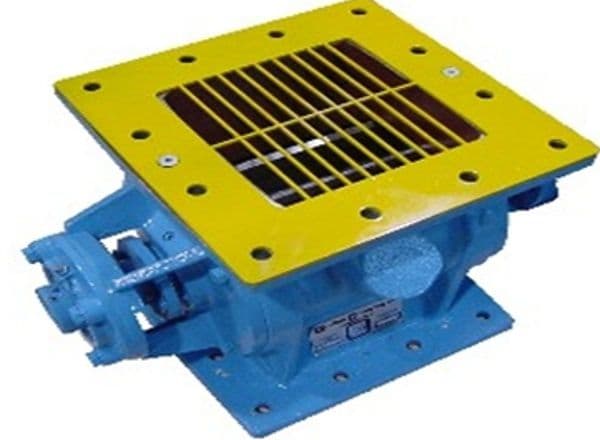
Rotary Airlock Valve Systems
Request QuoteEngineering Systems
6 precision-engineered systems within this domain.
Standard Rotary Airlock Valves
- Controlled material dosing
- Stable rotational sealing
- Reliable continuous-duty pressure isolation
System Engineering
Engineering Function
Rotary airlocks provide controlled material dosing, pressure isolation between zones, and prevention of air leakage. Precision-machined rotor vanes transfer material while maintaining differential pressure.
- Controlled material dosing
- Stable pressure isolation
- Air-leakage prevention
- Consistent continuous flow
Clearance & Sealing Engineering
Performance is defined by rotor-to-housing clearance, shaft sealing, bearing stability, and dimensional tolerance control.
- Excess clearance increases leakage and fan energy demand
- Insufficient clearance causes contact wear and operational instability
- Precision tolerance control balances sealing performance with mechanical reliability
Structural & Mechanical Design
High-strength housings, precision-machined rotors, balanced shafts, reinforced end plates, and replaceable wear components maintain dimensional stability.
- Differential-pressure loading
- Thermal expansion
- Abrasive wear rates
- Rotational fatigue resistance
Process Impact
Pressure isolation defines pneumatic energy efficiency.
- Reduced false-air ingress
- Stable pneumatic conveying
- Lower fan energy consumption
- Improved dust containment
- Increased plant reliability

Discuss Your Engineering Requirements
Our technical team is ready to support your specific kiln and pyroprocessing challenges.